Underfloor heating has become an increasingly common feature in residential construction and renovation. For installers and contractors, however, the choice between system types still raises important practical questions.
Different projects demand different solutions, and selecting the right approach from the outset can have a significant impact on installation time, floor build-up, system performance, and long-term reliability.
When comparing electric vs water underfloor heating, the decision rarely comes down to which system is ‘better’ in absolute terms. Instead, it depends on the scale of the project, the type of property, and how the heating will be used day to day. A small bathroom refurbishment presents very different requirements to a full heating system in a new-build home.
This handy guide looks at the key considerations installers and specifiers should keep in mind when deciding between electric vs water underfloor heating. By understanding where each system performs best, contractors can make informed choices that support both the installation process and the end user’s expectations.
Understanding the two systems
Before comparing applications, it’s worth briefly outlining how each system operates.
Electric underfloor heating uses resistance cables that warm up when electricity passes through them. These cables are either pre-spaced within heating mats or installed as loose cable systems that can be configured on site. Once installed, they sit beneath the floor finish and are typically controlled by a programmable thermostat.
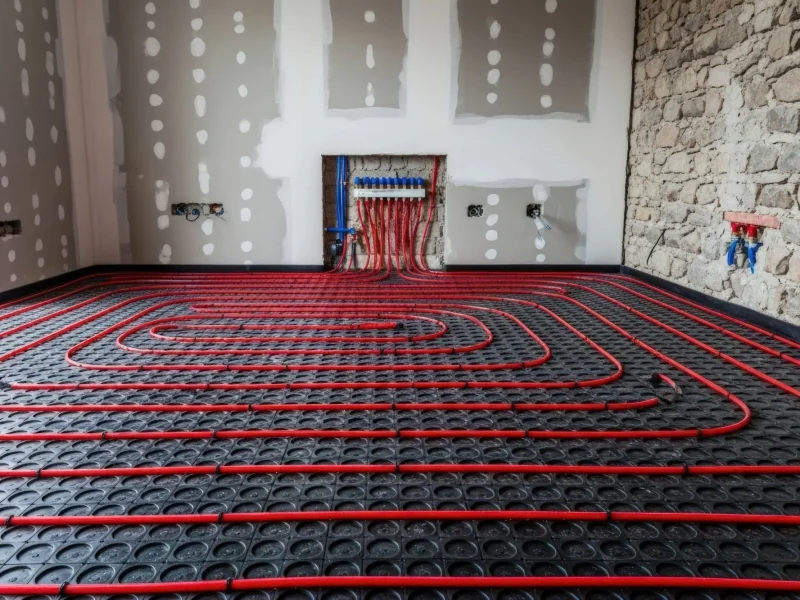
Water underfloor heating, on the other hand, circulates warm water through a network of pipes embedded within the floor structure. These pipes connect to a manifold, which distributes heated water from the property’s heat source, such as a boiler or heat pump.
So, when considering electric vs water underfloor heating, both systems aim to achieve the same outcome: consistent, even heat distributed across the floor surface. The difference lies primarily in how the heat is generated, how the system integrates with the wider heating setup, and how complex the installation becomes.
What are the typical use cases for each system?
One of the most practical ways to evaluate electric vs water underfloor heating is to consider the types of projects where each system is typically specified.
You’ll typically see electric systems used in smaller areas or individual rooms, particularly in retrofit situations. Bathrooms, kitchens, en-suites and small extensions are typical examples.
In these scenarios, installers often favour electric systems because they are relatively quick to install and require minimal disruption to the existing heating infrastructure.
A single-room project often doesn’t justify the additional pipework, manifolds, and controls associated with a water system, although water underfloor heating can still be a viable option depending on the size of the zone and the wider heating setup. Electric heating can be installed directly beneath tile, laminate or engineered flooring with relatively little floor build-up, making it well suited to renovation work.
Water underfloor heating is more commonly specified for whole-property heating systems. New-build homes, renovations, and larger open-plan spaces tend to benefit most from water-based systems. Because the pipe network connects to the main heating plant, it can serve multiple rooms through a manifold with individual zones.
For larger residential projects, the comparison of electric vs water underfloor heating often shifts towards system integration. When underfloor heating forms the primary heating system across an entire property, water-based solutions generally provide the level of coverage and control required.
What do installers need to consider?
From a contractor’s perspective, installation requirements often play a major role in the electric vs water underfloor heating decision. Let’s break down some of the key considerations for each system type.
Considerations for electric systems
Electric systems tend to be quicker to install. Heating mats such as our Warm-Flo Electric Mat System (100W/m² & 150W/m²) can be rolled out across prepared floors, cut and turned to suit the room layout, and connected to the electrical supply by a qualified electrician.
Loose cable systems like our very own Warm-Flo Loose Cable System provide additional flexibility in irregular spaces, allowing installers to position heating cables around fixtures and obstacles.
The simplicity of the installation process can make electric systems particularly attractive on smaller jobs where time on site is limited. Because the system operates independently from the property’s plumbing infrastructure, installers can often complete the heating installation without major changes to existing pipework.
Considerations for water systems
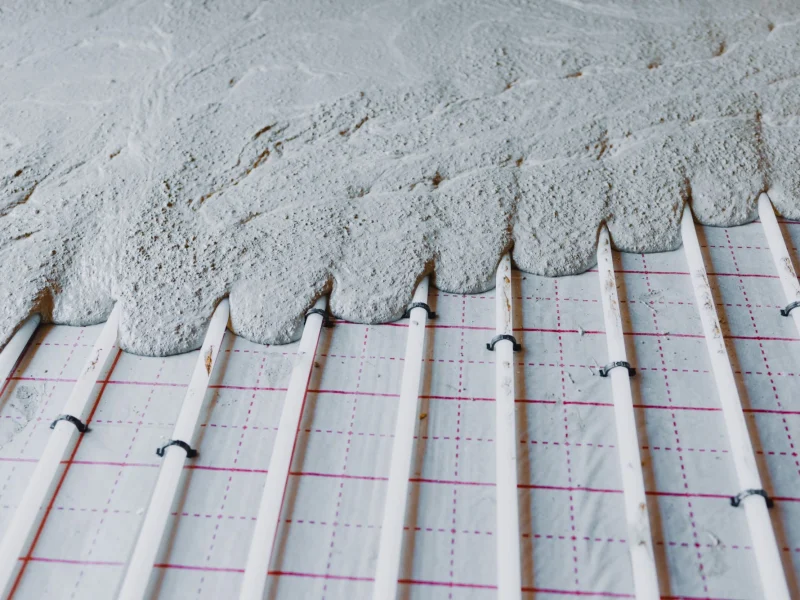
Water systems require a more involved installation process. Pipework must be laid carefully according to the heating design, usually fixed to insulation boards or panels before being covered by screed or flooring boards. Manifolds, pumps and controls also need to be integrated into the wider heating system.
For contractors working on larger builds, this additional complexity is typically planned into the project timeline. In many cases, water underfloor heating forms part of a fully designed heating layout that includes heat loss calculations, pipe spacing and zoning.
When weighing electric vs water underfloor heating, installers often consider whether the project already involves significant plumbing work. If the heating system is being installed from scratch, integrating a water-based system can be straightforward. But, for isolated upgrades or room refurbishments, electric systems might offer a simpler route.

Floor build-up and structural implications
Floor build-up is another key factor in the electric vs water underfloor heating conversation, particularly in renovation projects where height restrictions can present challenges.
Electric systems typically have a relatively low profile. Heating mats and cables can be installed beneath tile adhesive or self-levelling compound, adding only a small amount to the floor height. This can make them suitable for situations where raising floor levels is not desirable.
Loose cable systems offer additional flexibility in this regard, as installers can adjust spacing and layout to suit the available depth and the room geometry.
Water systems, depending on the design, often require greater floor build-up. Traditional screeded systems embed the pipework within a layer of screed that may range from around 50mm to 75mm in depth, although modern screeded overlay systems can allow water underfloor heating to be installed with floor build-ups as low as around 18mm.
This provides excellent thermal mass and heat distribution, but it also needs to be planned into the floor construction. If you’d like to see for yourself how these floor constructions look and work in practice, why not stop by our showroom?
For many installers assessing electric vs water underfloor heating, the available floor depth can quickly narrow down the options. A project with limited build-up may lean towards electric heating or low-profile water systems, while new builds usually provide the structural flexibility required for full water installations.
System performance and heat distribution
Both electric and water systems deliver radiant heat across the floor surface, which creates a comfortable and evenly heated environment. However, performance characteristics differ depending on how each system operates.
Electric heating responds relatively quickly, particularly in smaller areas. Because the heating elements sit close to the floor finish, the system can warm the surface efficiently once powered on. This responsiveness often suits spaces that are used intermittently, such as bathrooms that are heated at specific times of day.
Water systems typically rely on circulating warm water through pipework embedded deeper within the floor structure. As a result, they may take longer to reach full operating temperature, particularly in screeded floors with higher thermal mass.
That thermal mass, however, also means the system retains heat effectively once warmed up. For whole-property heating, this steady heat output can create a stable indoor temperature across multiple rooms.
When installers compare electric vs water underfloor heating, the discussion around performance usually centres on how the heating will be used. A small room requiring occasional heating may benefit from the responsiveness of an electric system, while background heating across an entire home often suits water-based installations.
Suitability based on property scale
Scale is often one of the clearest dividing lines in the electric vs water underfloor heating debate.
For example, electric heating systems work particularly well in smaller zones. Installing them across an entire property is technically possible, but the design considerations become more complex when multiple rooms require coordinated control and consistent heating.
For large homes or multi-room projects, water systems generally provide greater flexibility. Manifolds allow installers to divide the property into individual zones, each controlled separately. This enables occupants to adjust temperatures room by room while maintaining a central heating source.
Developers and contractors working on new-build properties frequently favour water underfloor heating for this reason. Once the pipe network is installed, it can serve the entire building as the primary heating system.
However, the comparison of electric vs water underfloor heating does not always produce a single easy answer. Some projects benefit from a hybrid approach, using water systems as the main heating source while installing electric heating in smaller areas such as bathrooms where additional warmth might be desirable.

What are the pros and cons of each system?
For specifiers and installers, understanding the practical advantages and limitations of each system is essential when assessing electric vs water underfloor heating.
Electric systems
Electric systems offer clear advantages in terms of installation simplicity and flexibility. They require minimal pipework and can often be installed without major alterations to the property’s heating infrastructure. This makes them well suited to refurbishment projects and smaller installations.
However, because electric systems operate independently from the central heating plant, they are typically used as supplementary heating rather than the sole heating source in larger properties.
Water systems
Water systems provide an integrated heating solution that can serve an entire building. When properly designed, they distribute heat evenly and allow for multiple zones controlled through a manifold system. For new builds and larger developments, this level of integration can simplify heating design across the property.
On the other hand, water systems require careful planning, detailed design work and more extensive installation. Pipe layouts, heat loss calculations and manifold positioning all need to be considered before installation begins.
By evaluating these factors, contractors can approach electric vs water underfloor heating as a design decision rather than a product choice.
The role of design and planning
Regardless of system type, successful underfloor heating installations depend heavily on good design.
For water systems in particular, accurate heat loss calculations and pipe layouts are essential. The spacing of pipes, the position of manifolds, and the integration with the property’s heating plant all influence how effectively the system performs.
Even electric systems benefit from thoughtful planning. Cable spacing, insulation beneath the heating elements, and thermostat placement can all affect how evenly the floor heats and how efficiently the system operates.
This is where experienced suppliers play an important role. Contractors often rely on manufacturers and distributors for advice on system selection, material compatibility and installation details.
When navigating electric vs water underfloor heating, having access to knowledgeable support can help installers avoid specification errors and ensure the system aligns with the project’s requirements.
Choosing the right system for the job
Ultimately, the choice between electric vs water underfloor heating should always reflect the needs of the project rather than a predetermined preference.
A bathroom renovation in an existing property may benefit from the speed and simplicity of an electric mat system. A new-build home designed around underfloor heating will usually favour a fully engineered water system connected to the main heating plant.
Installers and contractors who understand the strengths of each approach are better positioned to recommend solutions that work in practice. By matching the system to the scale of the project, the floor construction and the heating demand, they can deliver installations that perform reliably over time.
How Warm-Flo supports installers and contractors
Selecting the right heating system is only part of the process. Access to reliable supply, technical guidance and the right system components also plays an important role in delivering successful installations.
Warm-Flo works closely with installers and contractors to provide practical support when specifying underfloor heating systems. Our team can advise on product selection, system compatibility, and installation considerations, helping contractors choose the most suitable option for their project.
We also maintain stock of both water and electric underfloor heating products, enabling fast supply when projects are ready to move forward. From pipework and panels to electric heating mats and controls, our aim is to make sure that installers have access to the equipment they need without unnecessary delays.
If you are currently evaluating electric vs water underfloor heating for an upcoming project, our team is happy to help. Whether you need guidance on system selection, product availability or pricing, Warm-Flo can provide practical advice to support your specification.
Get in touch with the Warm-Flo team to discuss your project requirements and find the right underfloor heating solution.